
When planning activities and opportunities for children it is important to think of what you want them to learn, how you are going to help them learn it, and finally assess what they have learned so you can decide their next steps. (Intent, Implementation and Impact for anyone who works with Ofsted.) It can be tricky breaking this down into sections, especially if you are new to doing it, or are in the middle of an inspection with an inspector questioning you! This is where the planning resources included in the Childminding Best Practice Club toolkits can help.
Each Childminding Best Practice Club toolkit contains specially designed activities aimed at helping you teach your children the important concepts covered by each topic or theme. These are linked to planning grids which contain more ideas for you to try. These suggestions vary in difficulty or complexity to ensure that all the children in your care can join in at a level that is suitable for them.
Here is a sample of one of the planning grids:
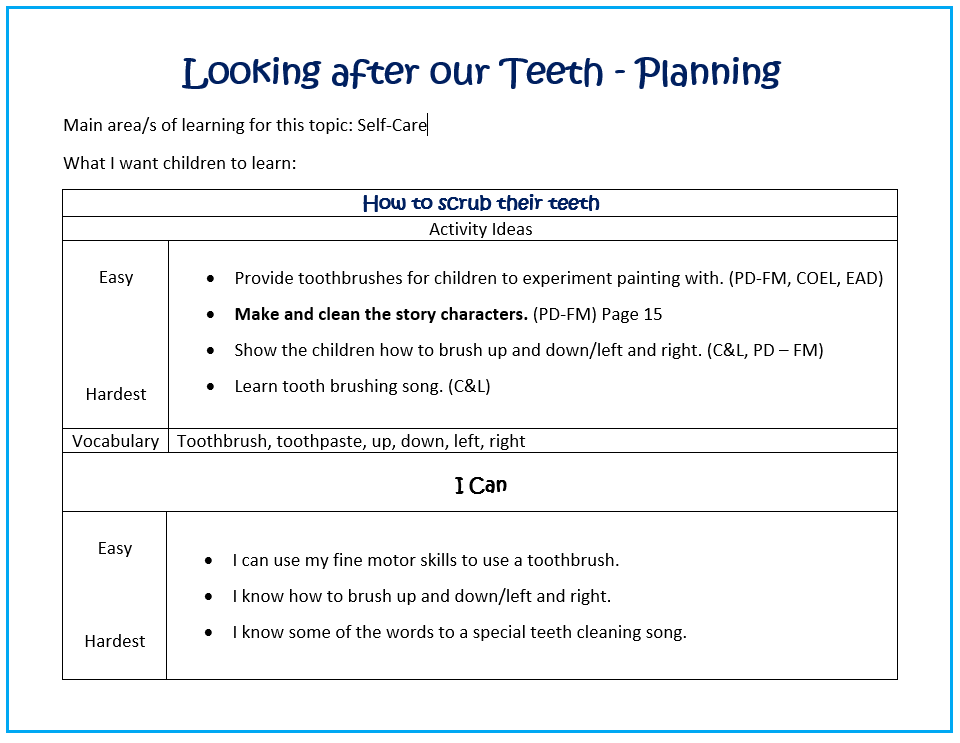
‘Looking after our teeth’ is the topic this planning grid comes from and the learning intent (‘What I want children to Learn’) is teaching children how to scrub their teeth. Activity suggestions, (how you implement the children’s learning,) in bold are included in the pack, along with any resources that you may need. The letters in brackets refer to the main areas of learning covered by each activity. (There is a key included in the packs which lists which each of these refer to.) Useful or important vocabulary is listed underneath the activities.
Here is another grid from the same topic:

The ‘I Can’ underneath list the things that children should be able to do after completing the activities. These are listed in order of difficulty to help you show that every child can achieve something, even if they are not at the stage to master the most difficult challenges. This is especially useful if you work with mixed age or ability groups. For example, you may read the story included in the pack to all of the children but the youngest children may only be able to talk about cleaning their teeth, while the older children can recount their experiences at a dentist.
