
Last updated 26/03/2023
If you can’t name 10 reasons that you think childminders are better than nurseries, then you shouldn’t be surprised when you lose business to them. Parents are overwhelmed with choice when it comes to care for their children and one of the choices they have to make is whether to send their child to a nursery or a childminder. You could probably write your own list of the benefits of childminders, but could parents write this list? Could YOUR parents write this list about YOU? Or have they forgotten why they chose you to look after their child?
The purpose of this article is two-fold. Firstly, to make sure that you have a clear idea in your own mind about why you are better than the nursery down the road. Secondly, to make sure that you are successfully communicating this information to parents, both to attract new business and to retain the business you have.
Part 1:
Here are a list of general reasons why childminders can be better than nurseries. With proposed changes to funding and ratios I have rearranged this list with the things that I feel will become increasingly attractive to parents to the top of the list.
Which of the following apply to you? Can you add to this list?

- A home environment offers the comfort of being in a home rather than a nursery AS WELL AS a professional who offers tailored activities and experiences for each child. Nurseries simply cannot replicate this and this is likely to become a really important selling point as children move to longer and longer hours in childcare.
- Flexible opening hours.
- Real-life experiences like trips to the shops, gardening, visiting the library, taking an outing to the park, cooking their lunch.
- Helping older children with homework after school.
- Trips to soft play, music club, classes and clubs.
- A consistent key person – a secure attachment figure who doesn’t change day to day – a chance for a child to build a long lasting close relationship over a period of time, sometimes for life!
- Care for siblings alongside each other.
- Mixed age ranges of children all playing together can have enormous benefits for all children.
- Smaller groups and more individual attention.
- More frequent outings due to smaller number of children to coordinate.
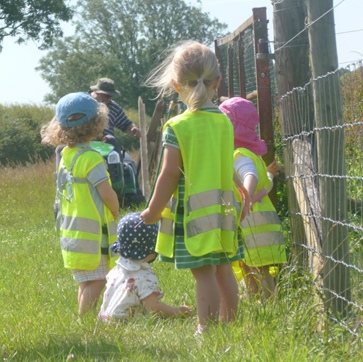
- Opportunities to do Forest Childcare daytrips – many childminders can make the commitment to weekly outdoor outings more easily than a nursery can.
- Quiet spaces to relax – nurseries are noisy and busy. This can be especially beneficial for children with additional needs.
Part 2:
What is unique about YOUR childminding business? Why should parents choose you?
The second step is to add to the list in Step 1 with the benefits of your own childminding setting. What is different about your business that would make parents want to choose your setting over your local nursery or the childminder down the street? Are you cheaper? Do you provide better meals? Do you speak two languages at home? Do you provide better outings? Do you have a sharp focus on STEM activities? Do you have lots of experience? Are you rated outstanding? Are your prices competitive? Do you offer funded places?

If you are new to childminding, this exercise will help you to think about how to write your directory listings, website entries and any other marketing materials you plan to produce like a brochure, Facebook page or a website. If you have been childminding for a while, do this exercise anyway. It will help you to stand back a little from your business and think about how you make parents aware of the good things you do so that they don’t start looking elsewhere for that ‘next best thing’.
Not sure what makes your setting or you different? Ask a friend to help you. Sometimes it can be really hard to stand back from yourself far enough to describe yourself well. I once heard that if you register on an online dating site that you should ask someone else to write your profile because it is very hard to describe yourself well. Other people are often better at recognising your good points than you are.
Part 3:
How do you promote your unique selling points to get “new” business?

One of the first places a new parent may hear about you is your online council directory or other directory listing site. These sites are often the gateway through which new parents will find you. Making you and your business stand out from a list of identical-sounding entries for childminders is tough. Your top three unique selling points need to stand out in the first two lines.
Don’t just rely on directory listings to get business. Can you put up flyers at your library or school, or music club or soft play gym? Can you make a website or Facebook page? Whatever methods you use make sure that you focus on what makes you and your setting unique and that this information is clear to parents at a two second glance.
Part 4:
How do you promote your unique selling points to retain parents’ business over time?
First a parent has to decide to place their baby with you. Then, when their child is old enough for nursery they need to make the decision again (how shall I split my time between a nursery and my childminder)? When their child starts school, the parent has to make the decision for a third time (shall I keep my child with my childminder, or sign him up for after school club?) In each instance, the parents will be doing a direct comparison between you and your competition.

You need to have a strategy for how you plan to KEEP their business. So promoting your unique selling points needs to continue long after you have signed the contract and should be a continual task on your priorities.
The golden rules for dealing with parents are to:
- Never let them forget why they chose you in the first place
- Always assume they are looking for the ‘next best thing’
- Don’t let them take you for granted
- Treat them as if they are customers who must continue to choose you over the competition
Look closely at your own setting. Which of these methods do you use to promote yourself to parents on an ongoing basis, reminding parents that you are ‘much more than just a babysitter’ and a better choice than switching to a nursery?
- Engaging conversations at collection time about the things you did with their child that day and what the child is learning at your setting.
- Daily diaries and daily care sheets.
- Photos up in your setting were parents will see them.
- Thank you card’s board.
- Facebook group or page (private) on which you post activities the children do.
- WhatsApp images.
- Newsletters.
- Learning Journeys showing parents the educational fun you are having.
- Regular art projects sent home and special projects like Christmas cards.
- Weekly plans posted so parents know what activities you are doing.
- Inviting parents to join your activities so they can ‘see you in action’ with the kids.
- Big, bright colourful eye-catching displays mixing photos, artwork and great learning involving all the children.
- Sending home suggestions for how parents can support learning at home.
It is a truth in any business that it is always easier to retain the business you have than to get new business. In other words, it should always be easier to keep families once you have them, than to go through the process of advertising and finding new families.
Top tip for helping parents to KEEP CHOOSING you: Get at least one nice photo of yourself WITH the child and send that photo home!
You may also like:
Partnership with Parents Pack
The Partnership with Parents Pack includes tools to help you to write your unique selling points to get new business, to manage the all-important first parent visit and to help you to think about how parents want to FEEL when they choose a childminder. The pack includes information for new childminders setting up and for experienced childminders hoping to achieve outstanding.

This pack includes:
- Supporting learning at home
- Attracting new parents to your setting – improving your marketing skills to get new parents to contact you, your unique selling points, WOW factors, managing the ‘first visit’
- Audit your setting to improve what you do
- Sharing challenging information about their child’s learning and development with parents in a tactful way
- Parent and child questionnaires
- Letter templates for challenging situations – late payment, late collection, unhealthy lunches, terminating your contract with a family.
Use the tools in the pack to examine what is working well and what needs to be improved in terms of how you work with parents.
Childminding Best Practice Newsletter
Sign up for the free Childminding Best Practice Newsletter and I will send you best practice ideas, childminding news, EYFS tips, outstanding ideas, stories from other childminders, arts and crafts project templates, new products, and links.
About Kids To Go
Kids To Go was established in 2008. Products include the Ultimate Childminding Checklist, best practice resources promoting diversity, safety and childminding in the great outdoors (Forest Childcare). It is the home of the Childminding Best Practice Club and the free weekly Childminding Best Practice newsletters.




 Join the


 The point of the experiment was to show that, while people like to have SOME choice, too much choice about things that don’t really matter (like flavour of jam) can cause people to get so overwhelmed that they decide it is easier not to buy any at all. By focussing the customers’ choices around just 5 flavours of jam, the customers still felt they had a choice, but without being overwhelmed by that choice.
 So one way to apply the jam experiment to childminded children is to focus their choices by giving them a between two or three toys. This way, they feel they have power but without being overwhelmed. The same applies to footwear (shoes or wellies), car seat strap (which arm first?), sandwich fillings (cheese or ham?), sandwich shape (square or triangle), colour of plate (red or green) and choice of fruit (apple or banana?). Giving choices, while limiting those choices to two things you are happy for a child to choose between, gives you all the power while the child has the illusion of feeling nicely in control of his life.
 If you charge extra for these outings and let parents decide whether to send their children on them or not, then every single outing is a decision for the parent they may not really want to make. They will think they want power over this decision, but truthfully, they will be happier if it is out of their hands. Can we afford the entrance money for the farm on top of the hourly rate? Maybe we should wait and take our precious little boy there ourselves at the weekend? What if I upset my childminder by saying I’d rather he didn’t go? What if he feeds his first goat when I’m not there to take the photograph for Facebook? Parents don’t want to go through this stressful thought process for every little day trip you take to something with an entrance fee (music club, soft play etc).
 Many childminders offer parents a choice of a hot meal or providing their own lunch. If you charge extra for the meal, many parents will feel they should bring their own from home to save money. If this decision is removed from parents, by stating in your policies that “a hot meal is included in your price and there is no discount if you want to provide your own food” means that you never have to deal with refunds at the end of the month, awful unhealthy packed lunches, or worse, asking parents to decide which days they would like a hot meal for their child this week, and which days they will providing it. Providing hot lunches as a default means that all the children eat the same thing, healthy things you have control over. Parents actually love the convenience of NOT having to make lunch each morning.
 I really worried when I launched the Club. There are 7000 crafts with space themes for pre-schoolers online. I really worried about those 7000 space activities because I worried that people wouldn’t want to join my Club because they could just find ideas online and copy them.


 Some things are better handwritten. Some things are better handmade like homemade baking is always better than store bought. Sometimes, a book with glued in pictures, while less tidy than an online app, is simply “nicer”. Many parents like to imagine choosing a childminder for their child in a dreamy, slowing down, biscuit crumbs and soft edges, sunny days pushing children on swings sort of way. Paper-based learning journeys smell of warmth and friendliness and fit better with this image. It is a good image because nurseries cannot recreate it, however many ‘key people’ they attempt to assign to a child or home corners they install!
 Do parents really want to spend their time logging on to some horrible, cumbersome online system to find out how their child is developing? Can they really be bothered? For those of you who do online learning journeys, how many parents ever really look at what you put in them? Do they bother to log on and check on their child’s development? Some parents will, but others might be much more likely to engage with the work you are doing and take more of an interest in their child’s development if you were to hand them a nice album with a few photos of their child in it and some simple observations you have written (or typed out) next to it.


